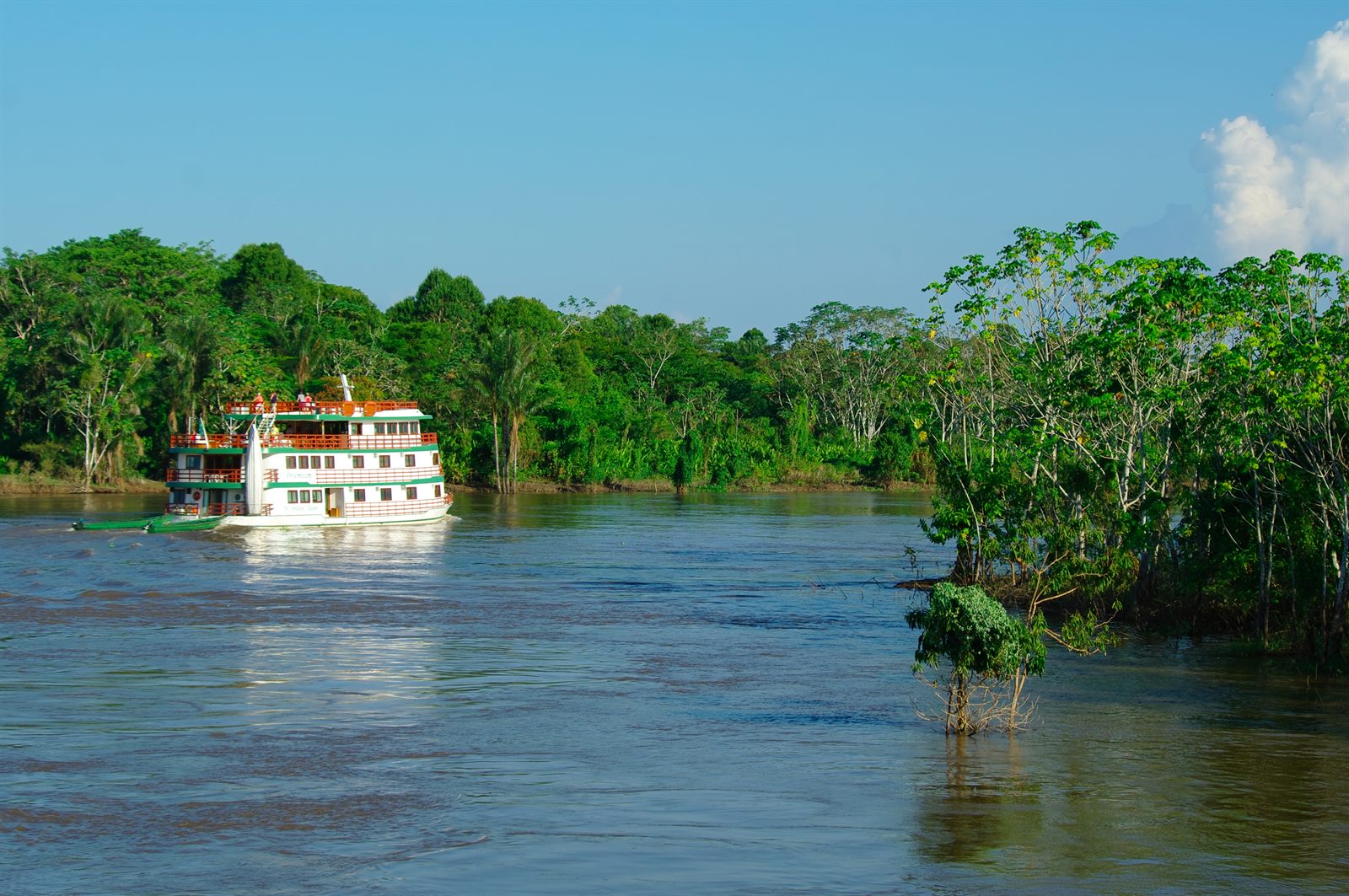
Amazon River Cruises
Pink dolphins, flooded forest and skiff outings at dawn on the upper and lower Amazon.
Get Free Amazon QuotesTwo Amazons: Peru and Brazil
The Amazon is not one trip but several. Most river cruises that call themselves “Amazon expeditions” sail one of two very different stretches: the upper Amazon in Peru, near where the river is born, or the vast lower river in Brazil around Manaus.
Peru: the upper Amazon and Pacaya-Samiria
The Peruvian Amazon begins near Nauta, where the Marañón and Ucayali rivers meet. Cruises here are short — often three, four or seven nights — and are based out of Iquitos, a jungle city reachable only by air or river. The great draw is the Pacaya-Samiria National Reserve, one of the largest protected areas in Peru, a maze of blackwater lakes, flooded forest and tributaries. Expect skiff outings at dawn and dusk to look for pink and gray river dolphins, macaws, hoatzins, monkeys, sloths and caimans, plus visits to riverside villages.
The ships are small and well appointed. Verified operators include Aqua Expeditions, whose Aqua Nera sails Iquitos–Nauta trips through Pacaya-Samiria, and Delfin Amazon Cruises, which runs the intimate Delfin I, Delfin II and Delfin III. According to the Official River Cruise Directory’s news desk, CroisiEurope is also adding Amazon river sailings to its 2027 program.
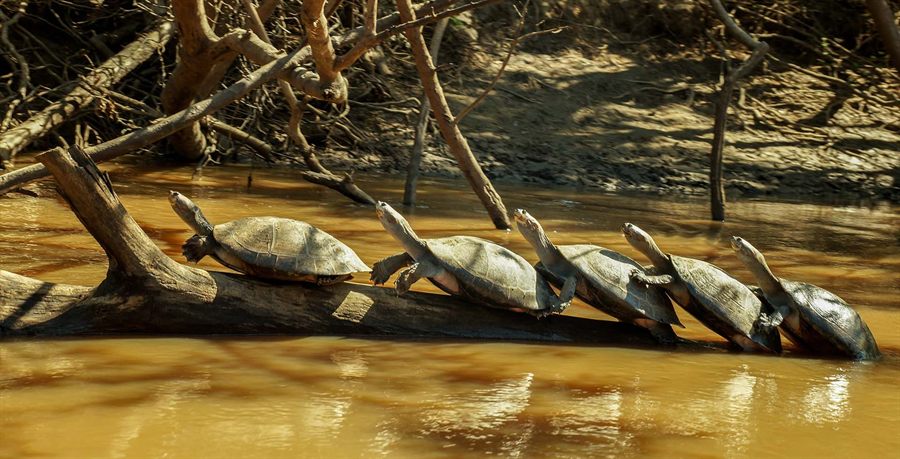
Wildlife from the skiff
Turtles, caimans and wading birds line the quieter channels. Your naturalist guide spots far more than you will.
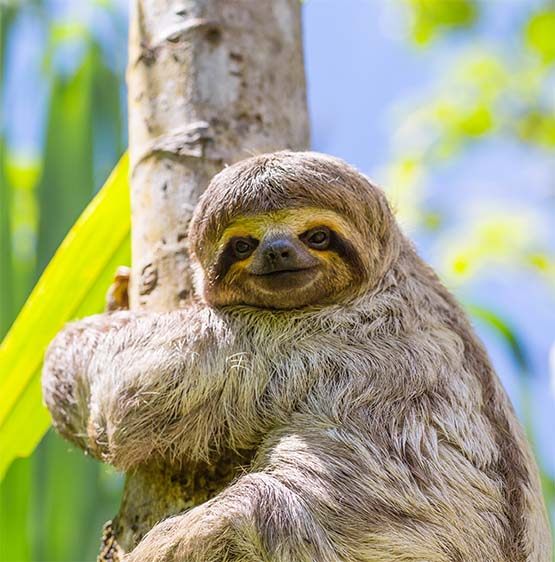
Look up
Sloths, monkeys and toucans live in the canopy. A pair of binoculars is the single most useful thing you can pack.
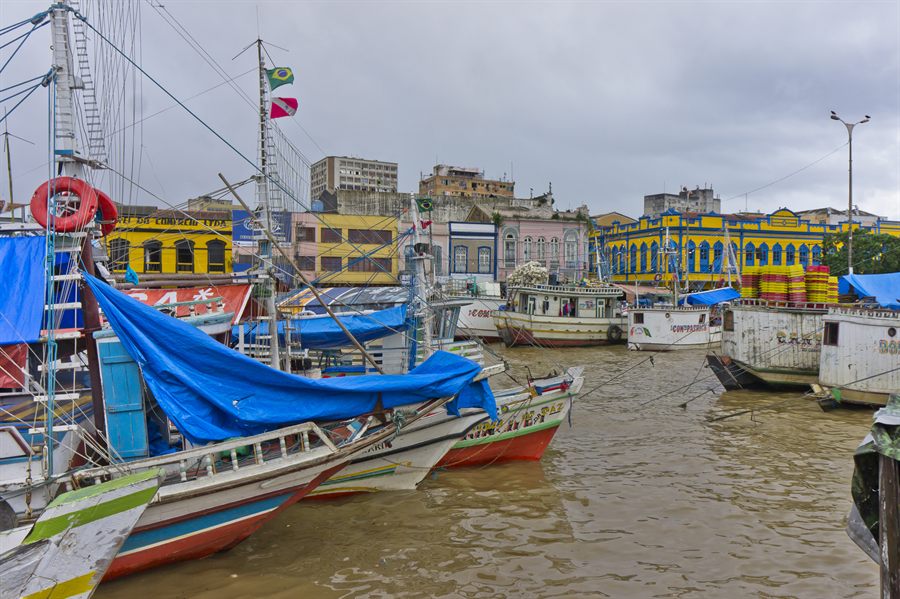
Life on the river
In the Amazon, the river is the road. Cargo boats, ferries and canoes carry people and goods between towns.
Brazil: Manaus, the Rio Negro and the Meeting of the Waters
The Brazilian Amazon is wider, grander and more about scale. Manaus, an opera-house city in the middle of the rainforest, is the usual base. Nearby is the famous Meeting of the Waters, where the dark Rio Negro and the sandy Solimões run side by side without mixing for miles. Itineraries here explore the Rio Negro’s blackwater channels and island archipelagos. Some ocean expedition ships also sail up the Amazon from the Atlantic; that is a different kind of trip, longer and with fewer skiff days, and we can explain the difference.
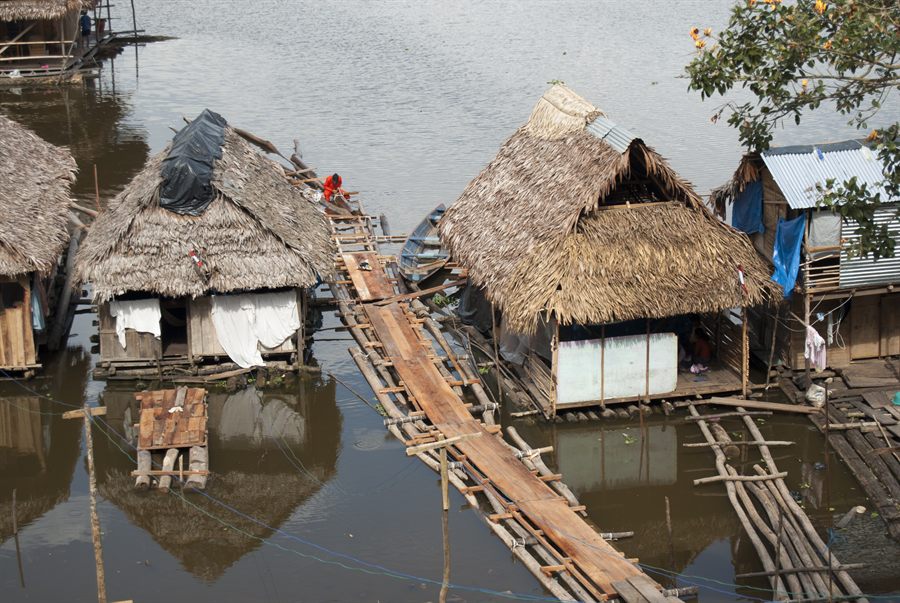
A Typical Day in the Peruvian Amazon
- Early wake-up for a dawn skiff outing, when birds and dolphins are most active
- Breakfast back aboard as the ship moves to a new tributary
- Late morning: a jungle walk, a village visit or kayaking, depending on water levels
- Lunch and a rest in the air conditioning through the hottest hours
- Afternoon skiff ride; perhaps piranha fishing or a swim where guides say it is safe
- Night outing by flashlight to look for caimans and frogs
Want the full detail on Amazon ships, villages and wildlife? See our sister site amazonrivercruising.com. For health preparation — yellow fever and malaria advice in particular — read our What to Expect page and check the CDC Travelers’ Health pages for Peru and Brazil.
Amazon Questions
Is it better to cruise the Amazon in high water or low water?
Both work. In the high-water months the river floods into the forest and skiffs can glide among the treetops, which is excellent for birds and monkeys. In the low-water months beaches and sandbanks appear, there are more trails to walk, and wildlife concentrates along shrinking channels. Our advisors will match the season to what you most want to see.
How do I get to Iquitos?
Iquitos cannot be reached by road. Travelers fly in, usually via Lima. Most Peruvian Amazon cruises meet guests at Iquitos airport and transfer them to the ship.
Can I add Machu Picchu?
Yes, and many travelers do. Lima, Cusco and the Sacred Valley pair naturally with a Peruvian Amazon cruise, either before or after. We can quote the whole trip together.
Plan Your Amazon Expedition
Peru or Brazil, high water or low: our cruise advisors at Mister Cruise will compare ships and seasons and send free quotes.
Get Free Amazon Quotes